The most important thing to know about Montenegrin beaches before you arrive: this is a pebble coast. Sand exists, but only in the south near Ulcinj. After enough trips with the same conversation in the car — “we read about [some beach], is it actually any good?” — we have a clear sense of what’s worth the drive and what isn’t. We drive guests to nearly every beach on the coast through the season, and this is the honest list, including the beaches we tell people not to bother with.
Quick facts about Montenegro beaches
- Coast length: ~293 km from the Croatian border to Albania
- Surface type: Mostly pebble or rock-and-concrete; sand limited to the southern coast
- Sea temperature: 13°C in winter, 24-26°C in August
- Sun lounger rentals: Typically €15-€30 per pair; €40-€60 at premium spots
- Best swimming season: Mid-June through mid-September
- Crowdedness: Heaviest July 15 – August 25
Bay of Kotor beaches — the calm sheltered ones
The Bay of Kotor is more about views than beaches. Most “beaches” inside the bay are concrete platforms with ladders into the water, not the sandy strands you’d picture from a brochure. But for calm water with mountain views, the bay works.
Plavi Horizonti (Pržno on the Luštica peninsula). One of the best in the bay. A real curved beach with fine pebbles, shaded by pines, in a sheltered cove. About 20 minutes from Tivat. Summer crowds but never as packed as the open coast.
Žanjic. Larger beach on the Luštica peninsula, accessible by car or by boat from Herceg Novi. Pebble, with a few restaurants and rental loungers. Day-trippers from cruise ships in Kotor sometimes overflow here.
Mirišta. Just next to Žanjic, smaller and quieter. Boat ferry across to the Mamula island fortress (now a hotel) leaves from here.
Bigovo. South side of Luštica, a small fishing village with a calm pebbly beach and excellent fish konobas. Less developed, family-friendly. We send guests here when they want a quiet meal-plus-swim afternoon.
Beaches inside Kotor and Tivat town. Skip them. They’re small, crowded, and overshadowed by the working ports. Drive 20 minutes to one of the above instead.
Budva Riviera beaches — the famous ones
The Budva-to-Petrovac stretch is what most people picture when they think of Montenegro beaches. Famous, crowded in season, varied quality.
Mogren. Two small pebble bays just west of Budva old town, accessed by a coastal path through a tunnel. Cleaner water than the main town beach. Crowded but worth the 10-minute walk.
Slovenska Plaža. 1.5 km of pebble in front of the Budva hotel strip. The biggest, most central, most crowded beach on the Riviera. Loud bars, inflatable water trampolines, sun-lounger upselling. Skip this one unless you’re staying at one of the strip hotels and don’t want to drive anywhere.
Jaz Beach. 5 km west of Budva, a 1.2 km long pebble beach with a wide flat coastline. Famous for hosting the Sea Dance festival and earlier the Madonna and Rolling Stones shows. Outside festival weekends it’s a normal big beach. During festivals it’s chaos.
Trsteno. A small sandy beach about 1 km southwest of Jaz, tucked into a sheltered cove. One of the few proper sand beaches on the Budva Riviera — gentle entry, calm water, popular with families. Gets crowded by 9:00 in July and August, so arrive early.
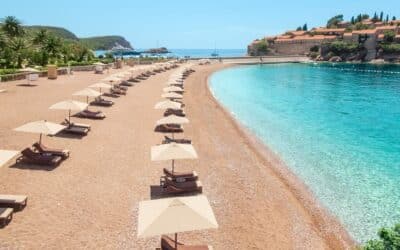
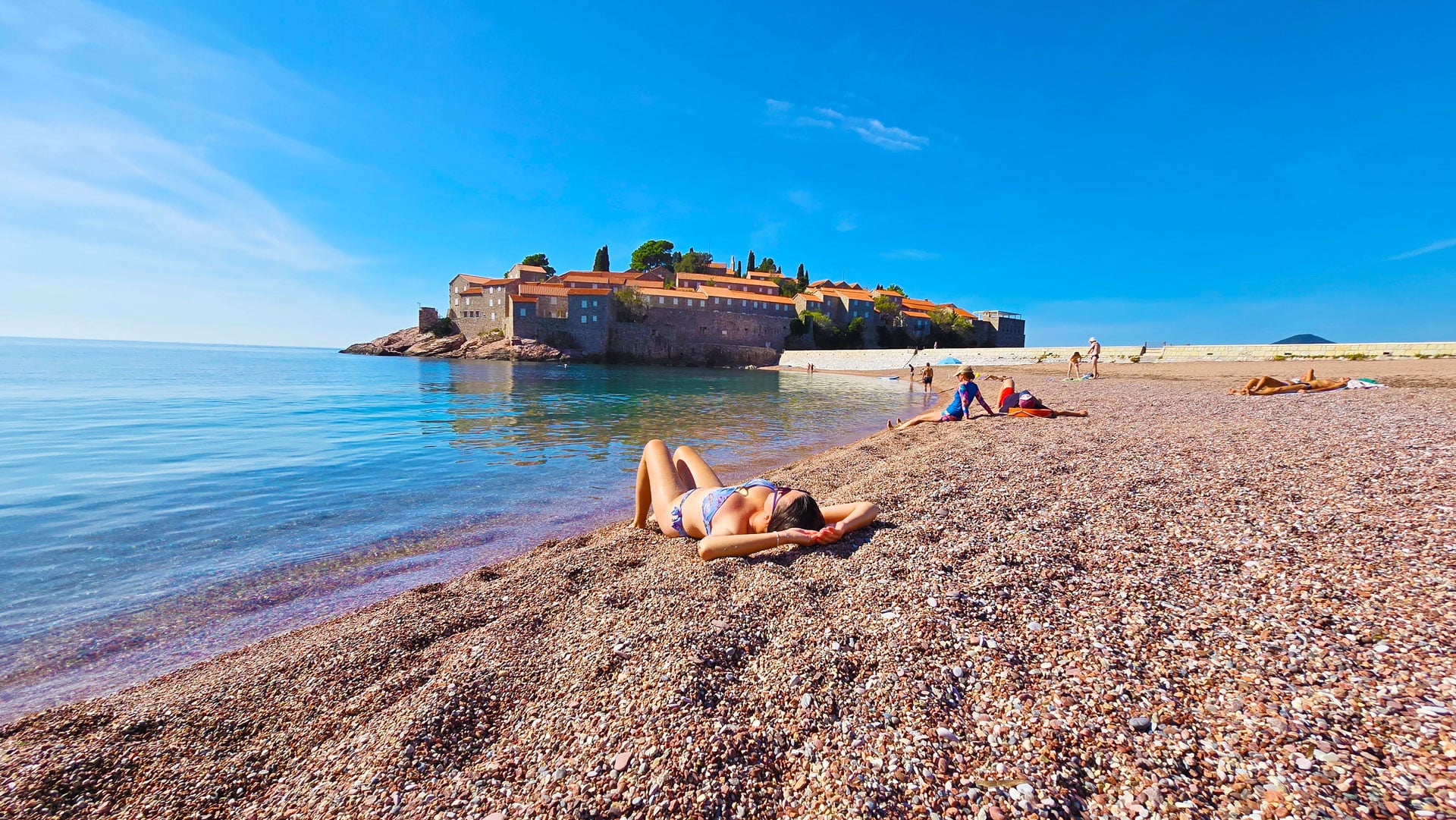
Sveti Stefan beach. The pink-pebble beach split by the island causeway. Both sides of the causeway are public. The Aman Sveti Stefan reopens for summer 2026 (Villa Miločer May 22, island July 1) so the resort-managed loungers and the access to the resort-side beaches may change again. Photogenic from the moment you arrive; one of the must-stops on any Riviera tour. The Tivat to Sveti Stefan transfer is one of our most-booked summer routes.
Miločer and Queen’s Beach. A 10-minute walk through the Miločer pine forest from Sveti Stefan. Once private, now public access. No facilities, no loungers, but the cleanest water on this stretch. Bring a towel.
Pržno (the village south of Sveti Stefan). Small calm bay, family-friendly, good restaurants on the waterfront. Different Pržno from Plavi Horizonti — same name, different beach.
Bečići. 2 km east of Budva, a long fine-pebble beach with a row of large hotels behind it. Lounger rentals, beach bars, and family infrastructure. Less crowded than Slovenska Plaža in Budva town itself.
Kamenovo. Just past Bečići toward Pržno, a smaller pebble cove framed by pine and rock. Lounger rentals, a beach bar, and a steeper drop into the water than Bečići. Good escape from the bigger crowds.
Drobni Pijesak. Hidden small bay between Sveti Stefan and Petrovac, accessed by a steep path down from the road. Few people make the walk. The water clarity is the best on the Riviera.
Petrovac and south — quieter beaches with character
South of Sveti Stefan the coast becomes less developed. Better for travelers who want fewer crowds.
Petrovac town beach. Compact pebble beach in the centre of Petrovac, with the Venetian Castello at the south end and the two small offshore islands (Sveta Nedjelja and Katič) you can swim out to. Family-friendly, less crowded than Budva. We drive guests on the Tivat to Petrovac route regularly during the season — about 35 minutes from the bay.
Lučice. 1 km south of Petrovac on a small road off the main coast highway. Sheltered pebble cove, fewer day-trippers than Petrovac itself.
Buljarica. 4 km south of Petrovac, a long beach (~2.5 km) of mixed sand and pebble. Surprisingly undeveloped — a few small bars, a campsite, no big hotels yet. Plenty of space even in August.
Bar to Ulcinj — where the sand actually is
The southern coast is where Montenegro’s sandy beaches live. The drive from Budva to Ulcinj is about 1 hour, longer in summer traffic.
Velika Plaža (Ulcinj). 13 km of continuous sand from Ulcinj town to the Bojana river mouth. The longest beach in the eastern Adriatic. Different sections have different vibes — northern sections busier with hotels, southern sections (Pearl, Safari) quieter with kite-surfing schools and beach bars. Genuine sand, gentle slope into the water, ideal for kids. The Tivat to Ulcinj transfer is the longest day-trip route we run on the coast — about 1 h 45 min one way.
Ada Bojana. Sand island at the southern end of Velika Plaža where the Bojana river meets the sea. Naturist beach (the original FKK on this coast since the 1970s), with traditional fish restaurants on stilts in the river. Authentic and quiet, but the naturism is the main feature — non-naturists are fine on the river-side restaurants but the beach itself is clothing-optional. The Tivat to Ada Bojana transfer usually combines with a long lunch at one of the river restaurants.
Mala Plaža (Ulcinj). Smaller crescent beach right in Ulcinj town, sand and gravel. Crowded but central.
The beaches we tell guests to skip
This is the section most travel blogs leave out:
- Slovenska Plaža (Budva). Crowded, loud, the lounger upselling never stops, the fast food is mediocre. Stay here only if you’re at a strip hotel and don’t want to move.
- Jaz beach during festival weekends. Otherwise fine; on Sea Dance weekend it’s unusable.
- Miločer beach if you want loungers. No rentals available (a consequence of the Aman closure period). Bring a towel or pick another beach.
- Most “secret” beaches sold by tour operators. The actually-quiet beaches require effort — Drobni Pijesak, parts of Buljarica. The “secret” ones in tour brochures usually have a beach bar and 200 people on them.
- Town beaches inside Kotor port. Tiny, in working harbor water, surrounded by buses. Drive 20 minutes for anything better.
Bring water shoes — yes, really
This is the single most useful piece of advice for first-time Montenegro visitors. Pebble beaches mean sharp stones, sea urchins occasionally, and sometimes hot pebbles in midday. Closed water shoes (the rubber ones with mesh tops) cost €5-€15 at any Budva or Tivat shop and make every beach trip more comfortable.
Sandy beaches in Ulcinj are the only place you don’t need them.
Best time to be on a Montenegro beach
The reliable swim-temperature window is mid-June to mid-September. July and August are crowded but the warmest. Late May and early June give you 21-22°C water and far fewer people. September is the locals’ favorite — sea still 23°C, restaurants open, no crowds.
The early morning trick at any famous beach: arrive before 9:00. The lounger sellers haven’t started, the sand/pebbles are cool, the photos are uncluttered. By 11:00 the day-trippers from cruise ships and bus tours are everywhere.
Mistakes we see clients make
- Driving to Velika Plaža for an afternoon from Tivat. It’s a 1.5 hour drive each way. Make a full day of it or stay closer.
- Booking accommodation on the Slovenska Plaža strip. You’ll spend the trip wishing you were anywhere else. Pick Sveti Stefan, Pržno, Petrovac or the Bay of Kotor instead.
- Going to Ada Bojana without knowing it’s nudist. This catches people out every season.
- Skipping water shoes. Mentioned above; one cut foot turns the trip into pharmacy visits.
- Trying to do five different beaches in one day. Pick two — one main beach for half the day, one different one in the afternoon. Driving between five wastes the day.
How we drive clients to beaches
Most of our beach work is door-to-door drops — pickup at your hotel in Tivat, Kotor or wherever you’re staying, drop at the beach gate, agree a pickup time, and back at the end of the day. For Velika Plaža in Ulcinj or other southern beaches, we usually do round-trip with waiting time.
If you’d like us to handle the drive from Tivat or anywhere on the coast, send us your dates and the beaches you’re considering. We drive every part of the Montenegro coast year-round and we’ll tell you honestly which beach matches your trip. The Tivat to Budva transfer covers most of the central Riviera beaches as a base.
Frequently asked questions
Are Montenegro beaches sandy or pebbly?
Most are pebble or fine gravel. The exceptions are in the south — Velika Plaža and Ada Bojana near Ulcinj are real sand, as is Buljarica beach near Petrovac. Bay of Kotor and Budva Riviera are pebble, sometimes with concrete platforms.
What is the most beautiful beach in Montenegro?
Most photographed is Sveti Stefan beach with the iconic island. For natural beauty, Drobni Pijesak between Petrovac and Sveti Stefan is hard to beat. For sand and space, Velika Plaža in Ulcinj. The ‘best’ depends what you want.
Is Sveti Stefan beach open to the public?
Yes — both north and south of the causeway are public, plus Miločer and Queen’s beaches just to the north. The Aman resort reopens for summer 2026 (Villa Miločer May 22, island July 1), which may change beach access on the resort-managed sections.
Which Montenegro beach is best for families with young kids?
Pržno (calm small bay with restaurants), Bigovo (shallow water, away from main tourist crowds), and Buljarica (long sand-pebble beach with shallow entry). Avoid the busier Slovenska Plaža in Budva for very young children.
Which beaches should you skip in summer?
Slovenska Plaža in Budva (overcrowded, loud, expensive sun-loungers), Jaz beach in mid-summer (festival weekends turn it chaotic), and Miločer beach if you want loungers (none rentable since the Aman closure, public access only).