No route we drive is as busy — or as unpredictable in summer — as Montenegro to Croatia. At Tivat Limo, we handle this border out of the Bay of Kotor every day, so this isn’t a polished marketing piece. It’s the practical advice we wish every client had before booking — written by people who watch this border live, every day, on the camera feed.
If you’re planning a transfer from anywhere in Montenegro to anywhere in Croatia, especially toward Dubrovnik or Dubrovnik Airport, the next ten minutes of reading will save you a lot of stress.
One of Europe’s Busiest Borders in Summer — and It’s Getting More Complicated
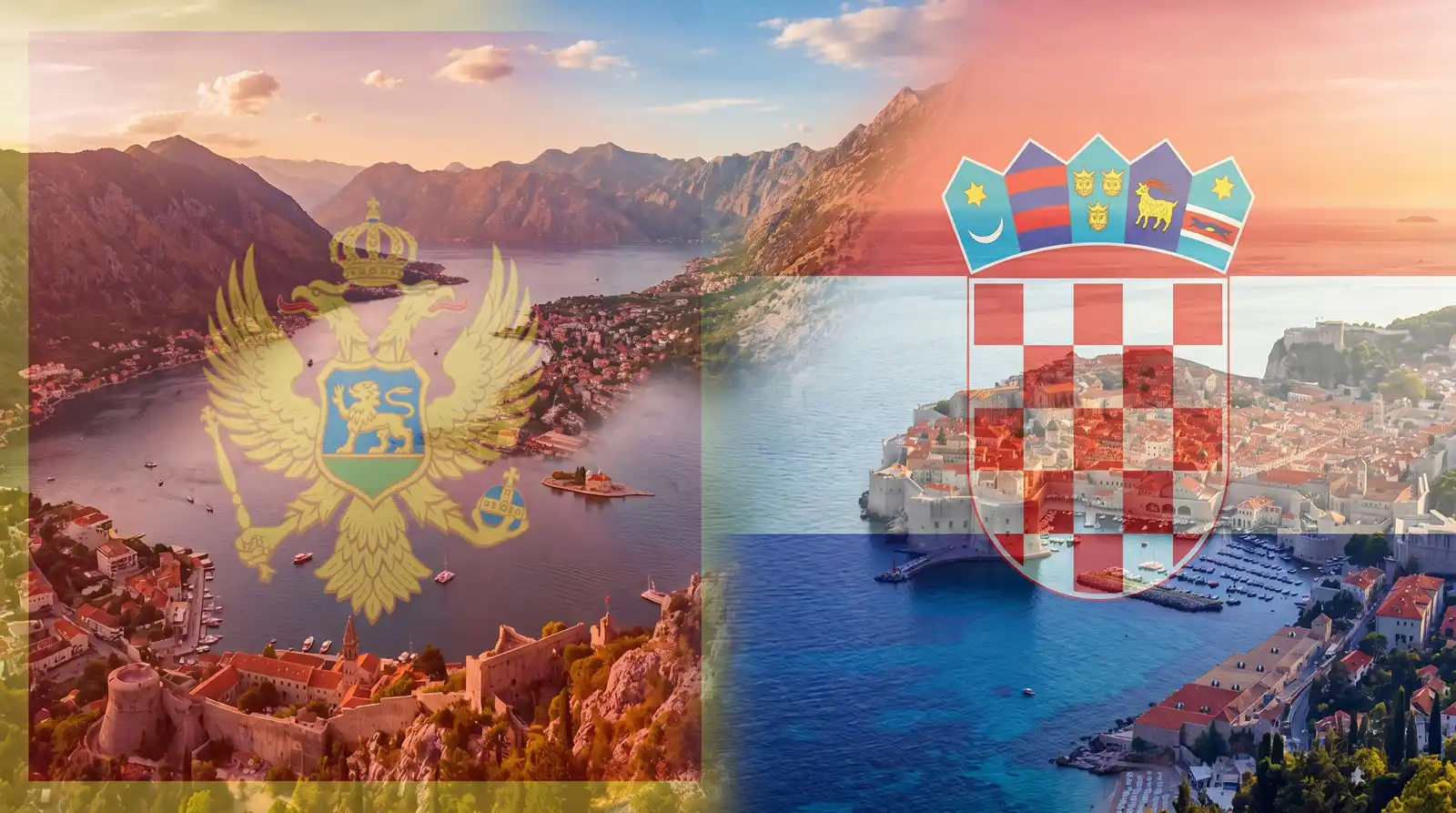
Croatia and Montenegro used to be one country. Today, the border between them turns into one of the most congested crossings in Europe every summer. The reason is simple. This is where the European Union’s external border meets a very busy tourist coast, and the infrastructure struggles with peak-season volume.
On top of that, the EU’s new Entry/Exit System (EES) went fully live on April 10, 2026. It replaces the old passport stamp with biometric registration — fingerprints and a facial scan — for every non-EU traveler entering or leaving the Schengen Area. The system already caused noticeable delays during its phased rollout in late 2025, and during the rollout and early operation, border authorities have been given some flexibility to manage congestion during peak periods.
What does that mean in practice? Even without EES, summer waits at this border are bad. With it, they can be worse. And if the system runs into technical issues — which has happened at other EU borders during the rollout — delays can become harder to predict than usual.
You’ll see plenty of websites advertising “fast border crossing” or “priority lane” transfers. Let us be honest with you: that’s marketing, not reality. Outside of state delegations, no private vehicle has any priority at this border. Anyone telling you otherwise is selling you something that doesn’t exist.
The Two Crossings — and Why We Choose Live, Not in Advance
There are two coastal crossings between Montenegro and Croatia in this region.
Debeli Brijeg – Karasovići is the main one. It’s the crossing Google Maps will show you by default, because it’s the most direct route. It’s also where most tourist traffic ends up, which means it’s usually the most crowded.
Kobila – Vitaljina is the smaller crossing, a short detour off the main road. Most tourists don’t know about it. Because of that, the queue is often shorter — sometimes much shorter.
Here’s what we actually do. Before reaching the border zone, our drivers check the live border camera feed and decide on the spot which crossing to use. We make a brief stop in Herceg Novi (more on that later) and that’s the moment the driver looks at the cameras and picks the best option.
One important note: a shorter queue doesn’t always mean faster processing. The smaller crossing usually moves faster, but if officers there decide to inspect every car, you can still wait a long time. We pick the crossing with the better odds — not a guarantee.
How Long Does It Take? The Real Range, Not a Guess.
The most common question we get is “how long is the border crossing?” The real answer is: it depends, and the range is enormous.
A typical summer daytime average is around two to two and a half hours. But averages don’t really help anyone, because the variance is huge:
- Our shortest crossing on this route was under 10 minutes — we got lucky, no queue.
- Our longest was around eight and a half hours, when the border IT system crashed and everyone froze in place.
So when a client asks us to decide what time the transfer should leave for the airport, we don’t take that responsibility. Here’s what we promise: our driver will be at your pickup location at the agreed time, with a clean, well-maintained vehicle, ready to go. What we won’t do is predict the border.
We used to play it safe and recommend leaving very early. The problem? Many clients then arrived at the airport four or five hours before their flight and weren’t happy about it either. There is no perfect answer here. The decision on departure time has to be yours, based on your own tolerance for risk and waiting.
Smart Ways to Reduce the Risk
If you’re catching a flight from Dubrovnik Airport (Čilipi), the safest strategy is also the most boring one: don’t try to do it in one day.
For a transfer from Tivat to Dubrovnik, we strongly recommend traveling the day before and spending the night in Dubrovnik or, even better, in Cavtat. Cavtat is a charming small coastal town just minutes from Dubrovnik Airport, and a local taxi from there to the terminal costs almost nothing. You sleep well, you eat by the sea, and you arrive at the airport relaxed instead of having spent half the morning in a border queue.
If staying overnight isn’t an option, travel at night. Borders are never empty, but the queues are far smaller after midnight and before sunrise. It’s not pleasant to leave at 3 AM, but it’s predictable.
Trebinje: The Detour Most People Don’t Consider
There’s a third option that few travelers think about: go through Bosnia and Herzegovina via Trebinje.
From most points in Montenegro, you can drive to Trebinje (a quiet, attractive old town in eastern Herzegovina), cross from Bosnia into Croatia at the small Ivanica – Gornji Brgat crossing, and arrive in Dubrovnik from the back side. The detour adds about 20 km to a Montenegro–Dubrovnik route. Yes, it means crossing two borders instead of one. But both are usually so much quieter that the total trip is often significantly faster than waiting at the main coastal crossing in peak summer.
Trebinje itself is worth the stop. The old town along the Trebišnjica River, the Arslanagić Bridge, the Hercegovačka Gračanica monastery on the hill above town — it’s the kind of detour that turns a problem into an unexpected highlight.
The Walk-Across Option (Only If You Ask)
This is something we don’t bring up by default, because some clients find the suggestion offensive. But for the right traveler, it’s a smart choice.
Pedestrians have absolute priority at the border — they walk straight past the line of cars. So in some cases we organize a relay arrangement with our partner companies on the Croatian side. Our driver brings you to the border, you walk across (a short distance, with luggage assistance), and a partner vehicle is waiting on the other side to take you to your final destination.
Why this works: instead of all of you sitting in a car for two or three hours, you spend maybe 15 minutes walking through pedestrian control. The total trip can be hours shorter. It’s also frequently cheaper than the all-in-one transfer.
We don’t push this on anyone, because not everyone wants to walk across a border with their suitcase. But if you ask about it, we’ll arrange it. Just know it’s an option.
“Why Not Just Rent a Car?” — A Word on the Hidden Costs
Many travelers assume renting a car is automatically the cheapest way to get from Montenegro to Croatia. On paper, the daily rate often looks great. The reality at the counter is usually different, and the math gets worse the moment you cross a border.
A few things rental companies don’t always explain clearly upfront:
- Cross-border fees. Most major rental companies charge an extra fee just for taking the car across the Montenegro–Croatia border. Depending on the company, this is typically €40–85 per rental, sometimes calculated per day.
- One-way drop-off charges. If you rent in Montenegro and want to leave the car in Croatia (or the other way around), the international drop-off fee can be substantial — often several hundred euros on top of the rental and the cross-border fee. For a short trip, this single line on the invoice often costs more than the rest of the rental combined.
- Green Card insurance. Required for crossing into a non-EU country. Some companies include it, others charge for it, and without it the border can refuse entry.
- Vehicle restrictions. Several big-brand rental fleets — including most BMWs, Mercedes, Audis and VWs rented in Croatia — are simply not allowed to be driven into Montenegro at all. So even if you booked a “premium” car, you may not be able to use it for this trip.
- The same border queue. A rental car waits in the same line as everyone else. There is no advantage there.
Once you add all of that to fuel, tolls, parking in Dubrovnik (which is expensive and limited), and the stress of driving an unfamiliar car on a road you don’t know during a long border wait, the savings often disappear. For a one-way Montenegro–Croatia trip in particular, a private transfer is frequently the cheaper option, not the more expensive one. We say this knowing it sounds self-serving — so when you compare quotes, ask the rental company directly for the all-in price including cross-border fee, drop-off fee, Green Card, and any insurance upgrades. The number usually surprises people.
Turn the Drive Into a Sightseeing Day
Here’s the mindset shift that changes everything for our clients: stop fighting the border, and turn the day into something you’ll actually remember.
If you’re not catching a flight, or if you’re flying out the next day, you have time. Use it. We’ve had countless clients tell us their transfer day ended up being the best part of their trip, simply because they spent it walking around old towns, eating slowly, taking photos — and then arriving at the border tired enough to nap through it.
Sightseeing won’t make the queue shorter. But a person who has spent the day exploring instead of staring at a dashboard handles the wait completely differently. Many of our clients fall asleep in the back during the queue. The border becomes the rest, not the ordeal.
Stops also don’t require big detours from the main route. Most of our suggestions are right on the way. The extra fee is modest, especially considering what you get in return.
One important note: always book your sightseeing stops at the time you book the transfer, not on the day. There are two reasons. First, the price for pre-booked stops is meaningfully lower. Second, we can’t always accommodate unplanned stops — our drivers usually have follow-up bookings, and a spontaneous one-hour detour may not fit the schedule. If you decide last-minute, we may not be able to say yes.
Herceg Novi — the Stop That Works From Everywhere
No matter where in Montenegro you’re starting from, Herceg Novi is on the way to both border crossings. That makes it the one sightseeing stop that fits every Montenegro–Croatia route. It’s a coastal old town with a walled fortress, narrow stone streets climbing up the hill, and good cafés along the seafront promenade. Half an hour of walking is enough to see the highlights, and a longer pause for lunch or coffee works just as well. Many of our clients didn’t have it on their itinerary and end up telling us afterwards it was their favorite stop of the day.
What Else Is Worth Stopping For — by Starting Point
Beyond Herceg Novi, the most logical sightseeing stops depend on where your trip starts.
From Budva to Dubrovnik: a stop in Tivat and Porto Montenegro is worth it. Porto Montenegro is the luxury yacht marina with high-end shops and waterfront cafés. It’s a quick coffee-and-walk stop that fits naturally into the route.
From almost anywhere — Kotor and Perast: the obvious classics, and they earn it. The Old Town of Kotor is a UNESCO site with narrow stone streets and a Venetian fortress climb. Perast is the smaller, quieter sister: a postcard waterfront with a short boat ride out to Our Lady of the Rocks, an artificial islet with a 17th-century church on it. The boat trip takes around 30 minutes round trip and is one of the most photographed experiences in Montenegro.
Including these stops on most routes from Montenegro means driving around the Bay of Kotor instead of taking the Kamenari–Lepetane ferry. That adds time, but the drive itself is one of the most beautiful in the country, looping past Risan and along the inner bay. From Budva, just keep in mind that the Budva–Kotor approach can have brutal traffic during peak hours.
The Kotor Cable Car — an underrated combination: most people assume the Kotor Cable Car is in Kotor town. It isn’t. The lower station, called Dub, is actually closer to Tivat Airport — about 5 km away. The 11-minute ride takes you up to 1,348 meters on Lovćen mountain, with a panorama over the entire Bay of Kotor. This makes it a perfect add-on for any Tivat Airport transfer, but very few visitors know to combine the two.
From Kotor to Dubrovnik: if you’ve already seen Kotor and Perast on a previous tour or simply prefer not to loop the bay, Herceg Novi (mentioned above) covers the sightseeing part of the day on its own.
From Podgorica to Dubrovnik: the route through Cetinje and Njeguši is the cultural and scenic version of this trip. Cetinje is Montenegro’s old royal capital with small museums and a slow, quiet feel. Njeguši is a mountain village famous for its smoked ham (pršut) and cheese. The road descending from Njeguši toward Kotor offers some of the best Bay of Kotor viewpoints in the country — the kind of view people remember years later.
From Portonovi to Dubrovnik: this is the one route where the choice of stop is essentially made for you. Portonovi sits very close to the border, and Kotor, Perast, Tivat — all the classic Montenegrin attractions — lie in the opposite direction. Driving back to see them and then turning around makes no logistical sense. Herceg Novi is the only sightseeing stop that’s actually on the way, and luckily it’s a very good one.
The Last Real Bathroom Stop
One practical note about Herceg Novi, if you stop there — whether for sightseeing or just briefly: use the bathroom before continuing toward the border.
Once you’re in the border queue, options disappear. There are no rest stops, no cafés, no public restrooms inside the queue. If the wait is two hours, the only realistic option is the bushes by the side of the road, which is not the Adriatic memory anyone signs up for.
We provide one bottle of water per passenger. In the summer heat and a long wait, that’s not enough. Bring more.
What Else Makes the Drive Easier
A few practical things that come up often.
Vehicle class isn’t about luxury — it’s about comfort during the wait. All our vehicles are modern, clean, and air-conditioned. Most clients pick the most affordable option: a sedan for groups of 3–4 or a standard van for groups up to 7. That’s perfectly fine for shorter routes. But for a Montenegro–Croatia transfer, especially in summer, the difference between a Škoda Octavia and a Mercedes E-Class — or between a Ford Tourneo and a Mercedes V-Class — becomes very real. Better seat ergonomics, quieter engine, more effective air conditioning, darker tinted windows, better sound. Two hours of waiting in a more comfortable vehicle is a meaningfully different experience.
Wi-Fi works in Montenegro, not in Croatia. We provide on-board Wi-Fi, but it stops working the moment you cross into Croatia because of roaming. So download what you want to watch or read in advance. Our vehicles also have phone chargers, and you can connect your phone via Bluetooth and play your own music — most clients prefer that to whatever’s on the radio.
Our drivers are quiet — until you want them not to be. Our protocol is to be helpful but not intrusive. Drivers don’t start conversations on their own. They’ll ask about temperature, music, breaks — practical things — but they won’t chat unless you start. That sometimes makes them seem reserved, but they’re not. They’re simply respecting your space. If you want to talk, ask them anything. Most of our drivers know not just Montenegro but most of Dalmatia and beyond, and their recommendations on where to eat, where to swim, where to skip — those are often more useful than what you’ll find on TripAdvisor. And the queue passes faster for them too when there’s a conversation going.
And One Last Thing — Bring Your Passport
We know how this sounds. Like we’re treating grown adults like they can’t read instructions. We get the look from clients when our drivers mention it.
But here’s the thing: we’ve seen people turned back at the border. It doesn’t happen every week, but it happens. Usually with a confident “Croatia is in the EU and Schengen now, so my ID card should be fine.”
For non-EU travelers — Americans, Brits, Canadians, Australians, anyone outside the EU — a passport is required. No exceptions. EU citizens may technically be allowed to cross with a valid national ID card, but in our experience the cleanest rule is this: bring the passport you arrived with. If you flew into Montenegro on a passport, that’s the document border officers will expect to see going out.
The reason this border is the way it is, and why a passport matters here, is worth understanding. You’re not moving inside the EU. You’re crossing into the EU from a country that isn’t a member yet. That makes Montenegro–Croatia an external EU border, and external borders are stricter by design.
This may change in the coming years. Montenegro is currently the frontrunner among EU candidate countries — the most advanced in the accession process — and the official goal is membership by 2028, though as with any accession process, the exact timing can shift. EU ambassadors approved the start of work on Montenegro’s accession treaty in April 2026. If Montenegro does join the EU in the next few years, this crossing should become noticeably easier. Schengen membership usually comes some years after EU membership (Croatia, for comparison, joined the EU in 2013 and Schengen only in 2023), but even just EU accession would significantly reduce what happens at this border today.
For now, though: bring the passport you arrived with. If your driver brings it up before departure, they’re not being condescending. They’ve just been on the wrong side of this conversation more times than they’d like.
Have a good trip. We’ll do our part — clean vehicle, on-time pickup, professional driver who knows the road. The border is the border. But with a passport in your pocket, a flexible plan, and maybe a stop or two along the way, even the worst queue becomes a story instead of a disaster.
Going to Croatia? You’ll may need the following:
- Transfer from Tivat to Dubrovnik
- Transfer from Tivat to Split
- Transfer from Kotor to Dubrovnik
- Transfer from Kotor to Split
- Transfer from Podgorica to Dubrovnik
- Transfer from Budva to Dubrovnik
- Transfer from Portonovi to Dubrovnik
- Private Tours With a Driver
Frequently asked questions
Do I need a passport to cross from Montenegro into Croatia?
For non-EU travelers, yes — a passport is required, no exceptions. EU citizens may be allowed to cross with a valid national ID card, but the safest rule is to bring the passport you arrived with in Montenegro. Officers will expect to see the document used for your entry into the country.
How long does the Montenegro–Croatia border crossing take?
It varies enormously. A typical summer daytime average is two to two and a half hours. Our shortest crossing on this route was under 10 minutes. Our longest was around eight and a half hours, when the border IT system crashed. There’s no reliable way to predict it on any given day.
Which border crossing is faster — Debeli Brijeg or Kobila–Vitaljina?
It depends on the day. Debeli Brijeg–Karasovići is the main crossing and usually the most crowded because Google Maps directs traffic there. Kobila–Vitaljina is smaller and often quieter, but a shorter queue doesn’t always mean faster processing. Our drivers check live border cameras before deciding.
What’s the fastest way to cross the Montenegro–Croatia border in summer?
If you ask us about it, we can arrange a relay arrangement with our partner companies on the Croatian side. Our driver brings you to the border, you walk across (pedestrians have absolute priority and skip the car queue), and a partner vehicle picks you up on the other side. This can save hours during peak season and is often cheaper than the all-in-one transfer. We don’t offer it by default — you need to ask.
Is it cheaper to rent a car instead of booking a private transfer?
Often no, especially for one-way trips. Cross-border fees, international drop-off charges, Green Card insurance, vehicle restrictions on premium rentals, and parking costs in Dubrovnik add up fast. When you compare the all-in price carefully, a private transfer is frequently the cheaper option.
What’s the best time of day to cross the border?
Late night and very early morning. Borders are never empty, but queues are far smaller between midnight and sunrise. Daytime in summer is the worst, especially mid-morning and late afternoon when most tourist traffic moves.
Why add sightseeing stops if I just want to get there?
Because sightseeing actually makes the trip feel shorter, not longer. Clients who spend the day walking around Kotor, Perast, or Herceg Novi arrive at the border tired and relaxed — many of them nap through the queue. Without stops, the same wait feels twice as long because the entire day was about the border. The detours don’t add much to the route either, since most of our recommended stops are right on the way.
Can I add sightseeing stops to my transfer?
Yes, but always book them at the time you book the transfer, not on the day. Pre-booked stops are meaningfully cheaper and guarantee that your driver and vehicle are blocked off for the extra time. Last-minute stops may not be possible if the driver has follow-up bookings.
Will I have Wi-Fi during the transfer?
Yes in Montenegro, no in Croatia. Our vehicles have on-board Wi-Fi that works on the Montenegrin side of the border, but stops once you cross because of roaming. Download what you need to read or watch in advance.