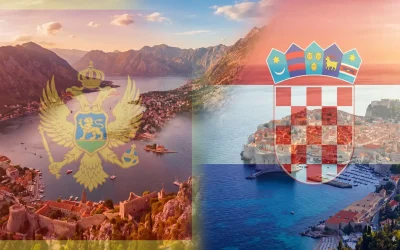
We get this question on the way from Tivat airport at least once a week. The Google search “Budva or Kotor” is a top result for a reason — the two are 35 minutes apart and could not be more different in feel. After enough trips between them, we have a clear answer: don’t pick. Stay somewhere in between, see both, and avoid the trap of basing your whole trip in the wrong one.
This is what we tell clients when they ask us to make the call.
Quick facts — Budva vs Kotor at a glance
- Distance apart: 23 km, 35-40 min by car
- Kotor population: ~13,500 (town); ~22,500 (municipality)
- Budva population: ~14,000 (town); ~21,000 (municipality)
- Kotor old town: UNESCO World Heritage since 1979, ~28 hectares
- Budva old town: Smaller (~3 hectares), heavily restored after 1979 earthquake
- Kotor known for: Bay setting, city walls, history, calmer atmosphere
- Budva known for: Beaches, nightlife, Riviera south of town, summer crowds
- Cruise ships: Kotor — yes, daily in season; Budva — no
- Swimming: Budva — central beaches; Kotor — drive 20 minutes to bay beaches
Kotor — what it does well, what it doesn’t
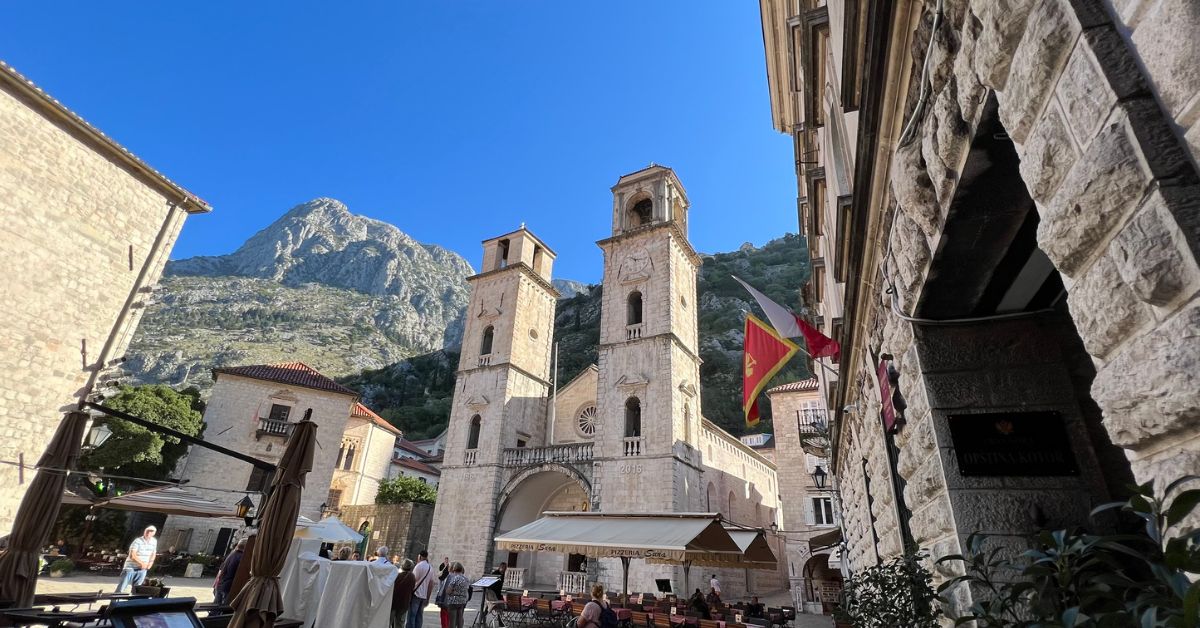
Kotor’s setting is unmatched on this coast. The old town is wedged between the limestone wall of Mount Lovćen and the head of the Bay of Kotor, with city walls climbing 1,200 meters up the mountain to the fortress of St John. Inside the walls, the medieval street grid has been mostly intact since Venetian times.
What Kotor does well
- Atmosphere. Stone streets, small squares, churches around every corner. The old town genuinely feels old, not theme-park rebuilt.
- The walls climb. 1,350 stone steps to St John’s Fortress at the top. €15 entry. The view down over the bay and the old town is the photo most people came for. Allow 90 minutes up and back, more if you stop for photos. Start before 10:00 in summer — the bare rock on the way up gets brutally hot.
- Day trips out. Perast (15 minutes drive), Our Lady of the Rocks island, the Vrmac peninsula viewpoints, Lovćen National Park behind.
- Food. Several seriously good restaurants inside the walls and along the bay. Better range than Budva for serious dining.
- Calmer feel. Quieter at night, fewer party crowds, better for couples and families with older kids.
What Kotor doesn’t do well
- Beaches. Almost none in town. The closest swimmable beaches are 20+ minutes drive away on the Luštica peninsula.
- Cruise ship overload. Two or three big ships in port at once means 4,000+ extra people in the old town between 10:00 and 16:00. Visit early morning or evening for any quality of experience in summer. From experience, Tuesdays and Thursdays in July are the worst — that’s when the most ships dock together.
- Heat trap. The old town is built into a south-facing rock wall. Midsummer temperatures inside the walls hit 40°C+. Most restaurants have shaded seating but the walking is hot.
- Limited nightlife. A few good bars but nothing like Budva. People in their 20s looking for a club scene will be bored.
Budva — what it does well, what it doesn’t
Budva is the resort town. The walled old town is genuine and worth visiting, but the town’s identity is the modern strip, the Riviera south, and the beach-and-bar economy that has grown around it.

What Budva does well
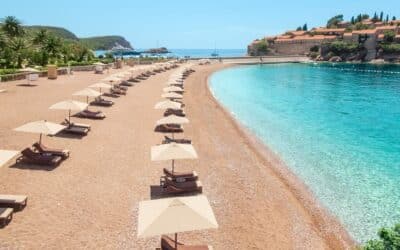
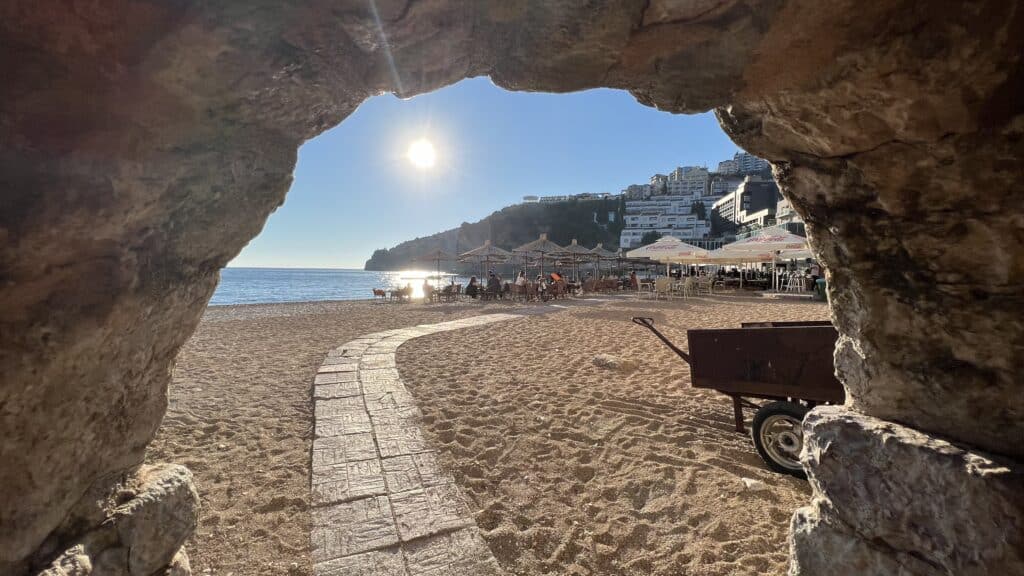
- Beaches and water. Mogren beach, Slovenska Plaža, and the entire Riviera south (Sveti Stefan, Pržno, Petrovac) within a 20-minute drive. Real beach holiday infrastructure.
- Nightlife. Bars, clubs, beach parties — Top Hill, Trocadero, beach bars at Jaz. Real summer energy from June through September.
- Range of accommodation. Everything from €25 hostels to 5-star hotels and private villas. Much more variety than Kotor.
- Old town is real. Smaller than Kotor’s but still authentic — Citadel, churches, old walls, sea views from the ramparts.
- Easier driving and parking. Wider roads, more parking lots, easier to get in and out than Kotor’s narrow bay road.
What Budva doesn’t do well
- Atmosphere outside the old town. The Slovenska Plaža strip is concrete hotels and tourist-trap restaurants. Not where you want to spend evening walks.
- Cultural depth. Old town is small, museums are minor. Once you’ve done Kotor, Cetinje, and even Perast, Budva’s old town feels light.
- Summer crowds. Peak July-August is genuinely overwhelming. Russian and Serbian school holidays push numbers up further.
- Restaurant quality vs price. The best Budva restaurants are good but you pay tourist prices for ordinary food at most. Pick carefully.
- Family suitability for older kids. Teenagers love Budva; families with young kids often prefer the calmer Bay of Kotor villages.
The honest answer — pick by trip type
If your trip is primarily about beach and swimming, base in Budva, Sveti Stefan, or Pržno. You’ll be 5-15 minutes from a beach and the swim-focused infrastructure is set up for you.
If your trip is about sightseeing, photography, and a calmer pace, base in Kotor or one of the bay villages (Perast, Dobrota, Prčanj). You’ll be at the heart of what’s worth seeing and the bay backdrop is the showstopper.
If you want nightlife or a young crowd, base in Budva. Kotor doesn’t have what you’re looking for.
If you want both atmospheres in one trip, base in Tivat. It’s halfway between, has the airport, the Porto Montenegro marina if you want luxury, and proper bay beaches like Plavi Horizonti within 20 minutes.
The “do both in one day” plan
A focused day handles both old towns:
- 9:00 — Pickup, drive to Kotor
- 9:30-12:00 — Kotor old town walking tour, optional Citadel walls climb (extra hour)
- 12:00-13:30 — Drive to Perast, lunch on the bay
- 13:30-14:30 — Boat to Our Lady of the Rocks (optional)
- 14:30-15:00 — Drive to Budva
- 15:00-17:00 — Budva old town, Citadel, Riva
- 17:00-18:00 — Mogren beach swim or coffee on the Riva
- 18:00 — Return drive
It’s full but works. You won’t do the Kotor walls climb on this schedule — that needs its own morning. Two-day plan is much better.
The 5-day “use both as bases” plan
This is what we recommend most often:
- Day 1-2: Base in Kotor or a bay village. Old town, walls climb, Perast, Lovćen, Cetinje
- Day 3-5: Base in Budva area or Sveti Stefan. Beach, Riviera south, Skadar Lake day trip, optional Bay of Kotor return for sunset boat
Splitting the trip means you actually rest in each base instead of constantly driving back and forth. The drive between them is short enough that day trips work either way.
Common questions we get from Kotor and Budva guests
- Basing in Kotor for a beach holiday. The driving back and forth gets old. If beach is the main thing, base in Budva or further south.
- Basing in Budva and not visiting Kotor. 35 minutes away. You came to Montenegro and skipped the most photographed bay in the country.
- Visiting Kotor old town at midday in August. Cruise ship overflow + heat = miserable. Go before 10:00 or after 17:00.
- Driving the Trojica scenic road in heavy fog. The “ladder of Kotor” road is spectacular but in fog it’s dangerous. The tunnel via Vrmac is the safe alternative.
- Trying to find quiet in Budva in the first two weeks of August. It’s the busiest time of year on the entire coast. Either embrace it or move base.
What we tell clients in the car
The single most useful thing: don’t pick a winner before you visit both. The Budva-Kotor comparison only matters when you’re trying to base in one. For most trips you should see both — they’re 35 minutes apart and they’re different enough that one doesn’t replace the other.
If you’re committed to one base, ask yourself: would I rather wake up to the sound of waves and a beach 50 meters away, or to the bell of a 12th-century cathedral in a stone alley? Both have their case. Neither is wrong.
Booking a transfer that covers both
Most of our work is the connecting tissue between the two — airport pickup at Tivat, drop at one or the other, then day trips between them and out to Sveti Stefan, Skadar Lake, Cetinje and beyond. We know which roads back up at which times of day, where to drop you so you don’t waste 20 minutes finding parking, and which restaurant in Perast is open in February.
If you’d like us to handle the drives between Kotor, Budva, Tivat or anywhere on the coast, send us your dates and what you’ve prioritized. We drive both year-round and we’ll tell you honestly when one beats the other. From the airport, our most-booked route on this stretch is the Tivat to Budva transfer. If you’re heading to the bay instead, the Tivat to Kotor drive is shorter and goes through the Vrmac tunnel. For guests basing in one town and visiting the other, the short Kotor to Budva run works best as a half-day round trip.
Frequently asked questions
Is Budva or Kotor better to visit?
Different things. Kotor is the historical and scenic showpiece — UNESCO old town, dramatic bay setting, calmer atmosphere. Budva is the beach-and-nightlife coast — bigger, louder, more swimming-focused. Both are worth a day each.
Which is better as a base — Budva or Kotor?
For a beach-focused holiday, Budva or the Riviera south of it. For sightseeing, food, and a calmer feel, Kotor. For balance, stay in Tivat or in one of the bay villages and visit both.
How far is Budva from Kotor?
23 km, about 35-40 minutes by car via Tivat and the Vrmac tunnel. The longer scenic route over Trojica pass takes about an hour and gives the famous bay views from above.
Can you do Budva and Kotor in one day?
Yes — a focused 9-hour day covers both old towns with lunch and a coastal stop. You’ll see the highlights but not have time for a long beach session or the Kotor walls climb. Two days is much better.
Is Kotor crowded with cruise ships?
Yes, in season. Cruise ships dock in Kotor port April through October, with peak crowds 10:00-16:00 on most summer days. Visit the old town early morning (before 10:00) or evening (after 17:00) for a much better experience.